Modernizing a Legacy POS
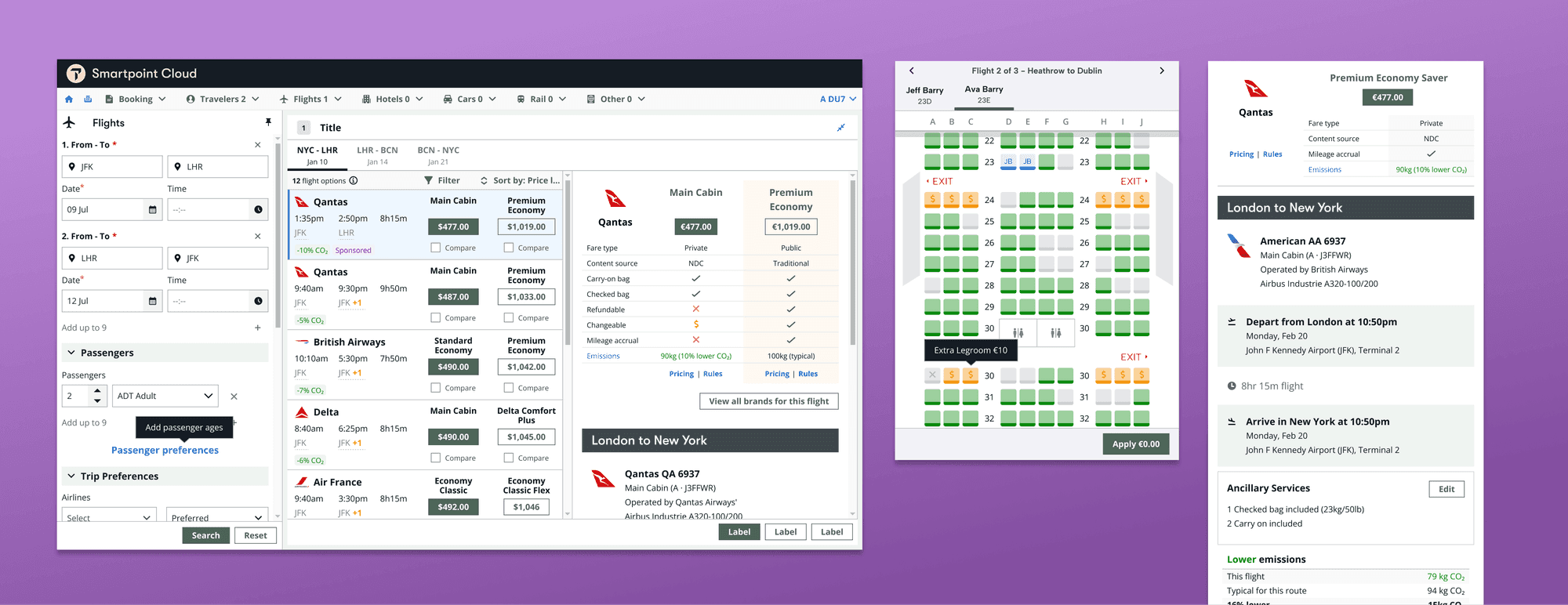
This case study captures how Travelport modernized a decades-old point-of-sale system into Smartpoint Cloud, a hybrid CLI–GUI platform that preserved expert efficiency while enabling a new generation of agents. Through research-driven design and global validation, I led the team to reframe modernization as evolution, not disruption. The result: CSAT feedback is solidly within enterprise benchmarks for B2B and travel-tech software and major adoption wins with Costco Travel, Chase Travel Group, GlobalStar, and Lufthansa City Center International; confirming Smartpoint Cloud’s impact as a faster, more intuitive, and modern retailing platform.
Context
Airline reservations began as a manual process, until IBM’s terminals revolutionized the industry in 1964. Within a decade, computerized systems became the norm and travel agencies were equipped with terminals that reshaped retailing.
Yet while the back-end evolved (from mainframes to cloud) the front-end barely changed. The cryptic, command-driven “green screen” of the 1960s remained the standard for decades, and even today thousands of agencies still rely on it, leaving B2B travel retailing lagging behind modern consumer tools.
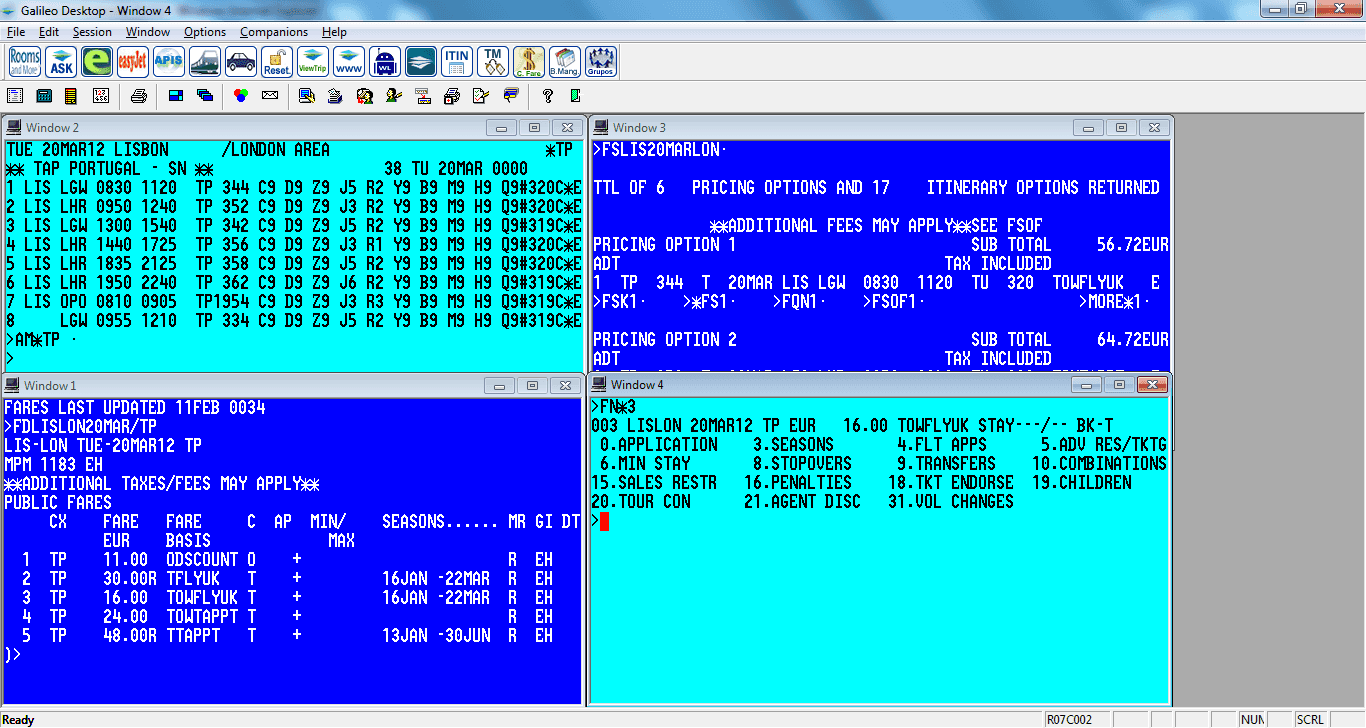
Above: Focal Point terminals
Previous modernization attempts had failed. Without a viable modernization strategy, the business risked losing relevance in a travel industry shifting toward rich, content-driven retailing.
This is the gap I set out to close.
Research
Market Research
I began by consulting internal subject-matter experts and conducting desktop research. This quickly highlighted the critical role of the GDS in airline business travel.
Business passengers
represent
75%
of an airlines profits
95%
of corporate agency bookings are booked via a GDS
System Research
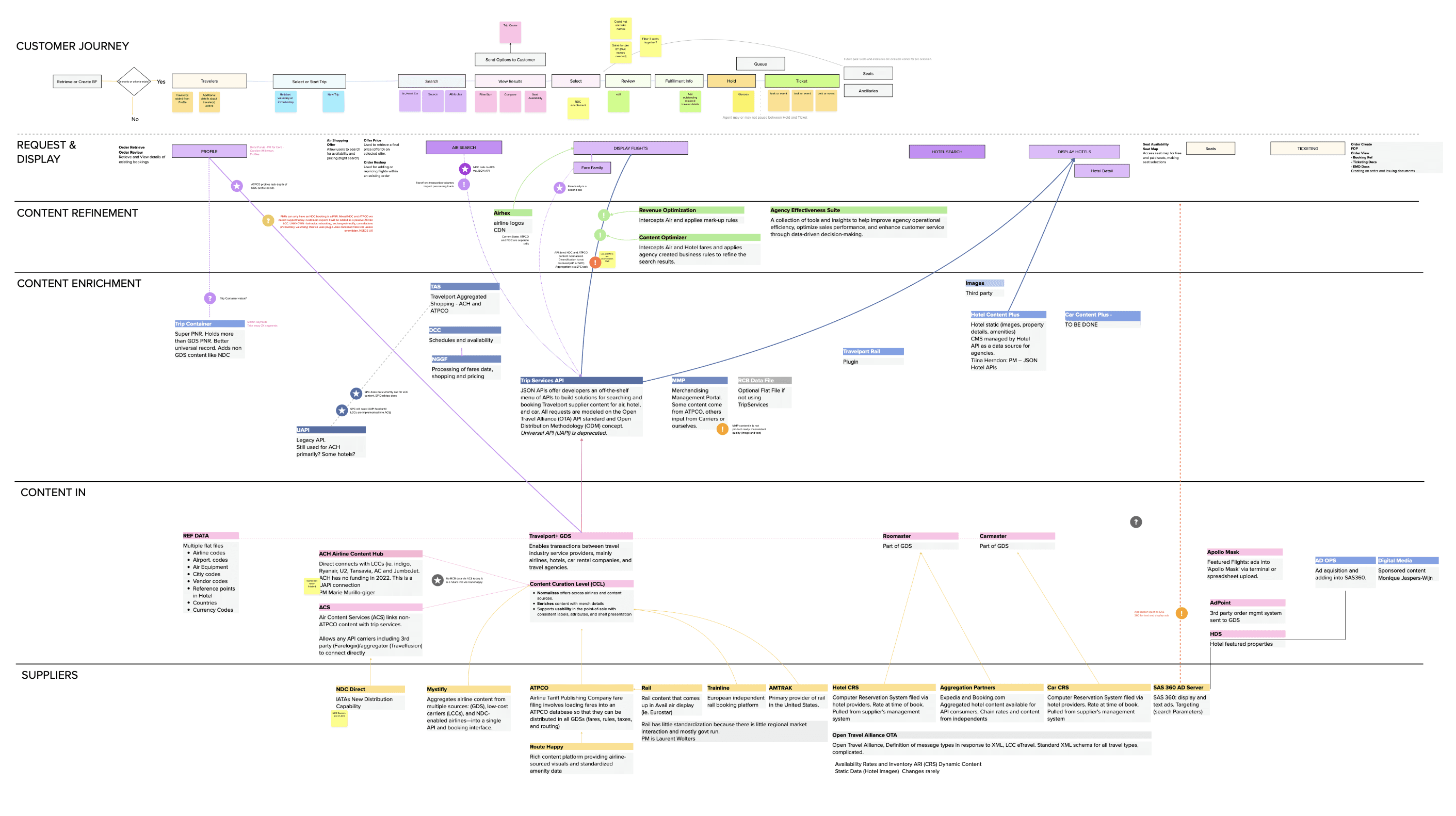
Next, I began mapping the end-to-end customer journey alongside the complex web of suppliers, APIs, and enrichment layers that power it. This systems-thinking approach revealed how many invisible dependencies sit behind a single booking, and how design decisions ripple across airlines, agencies, and travelers.
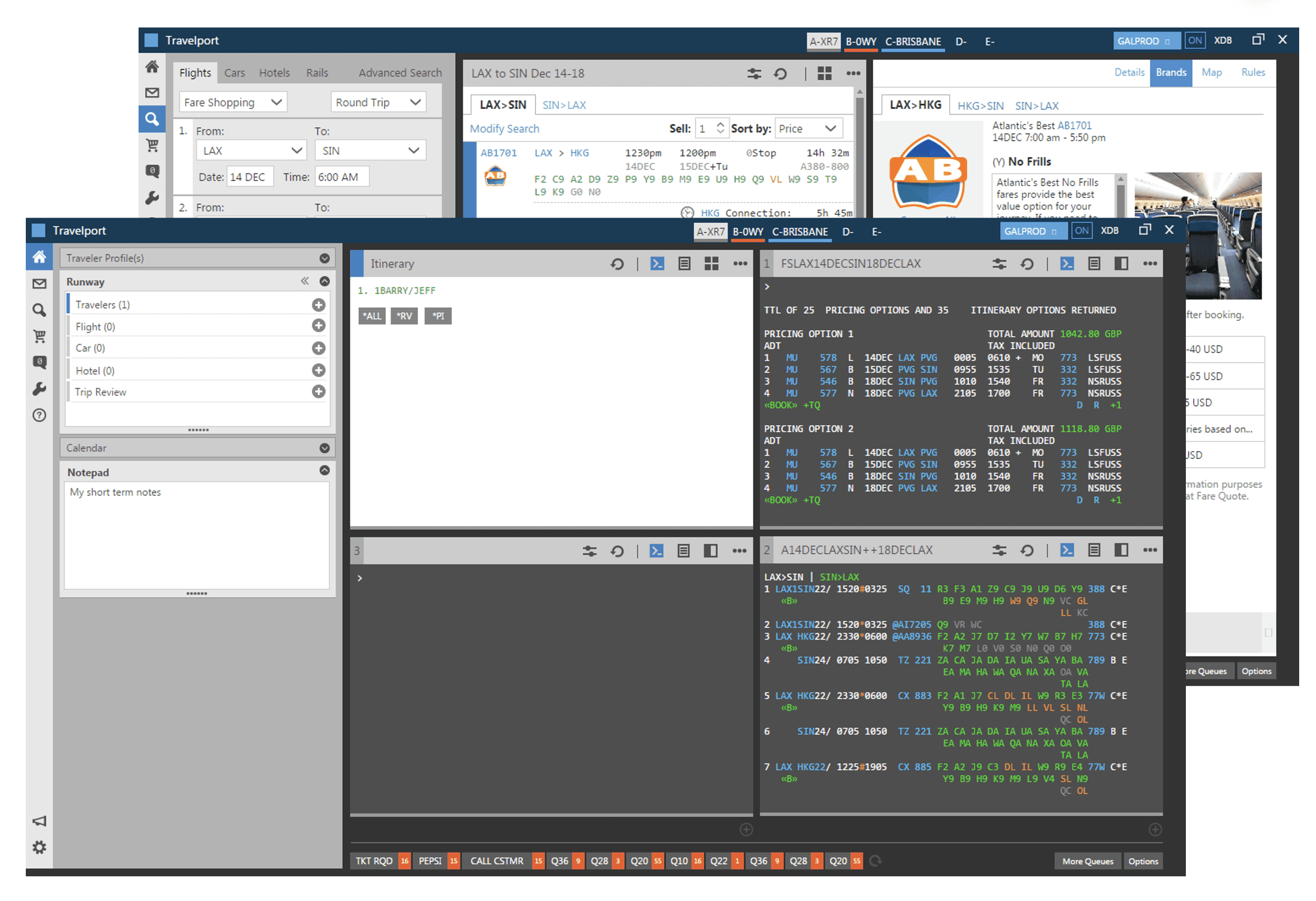
A key to understanding the user was recognizing that these systems are essentially early command-line interfaces (CLIs).
- Command-driven: Agents enter short codes and modifiers—cryptic commands followed by arguments—to search, book, or modify flights.
- Dense responses: The terminal returns text-heavy outputs that agents parse at a glance to find seat availability, fares, or rules.
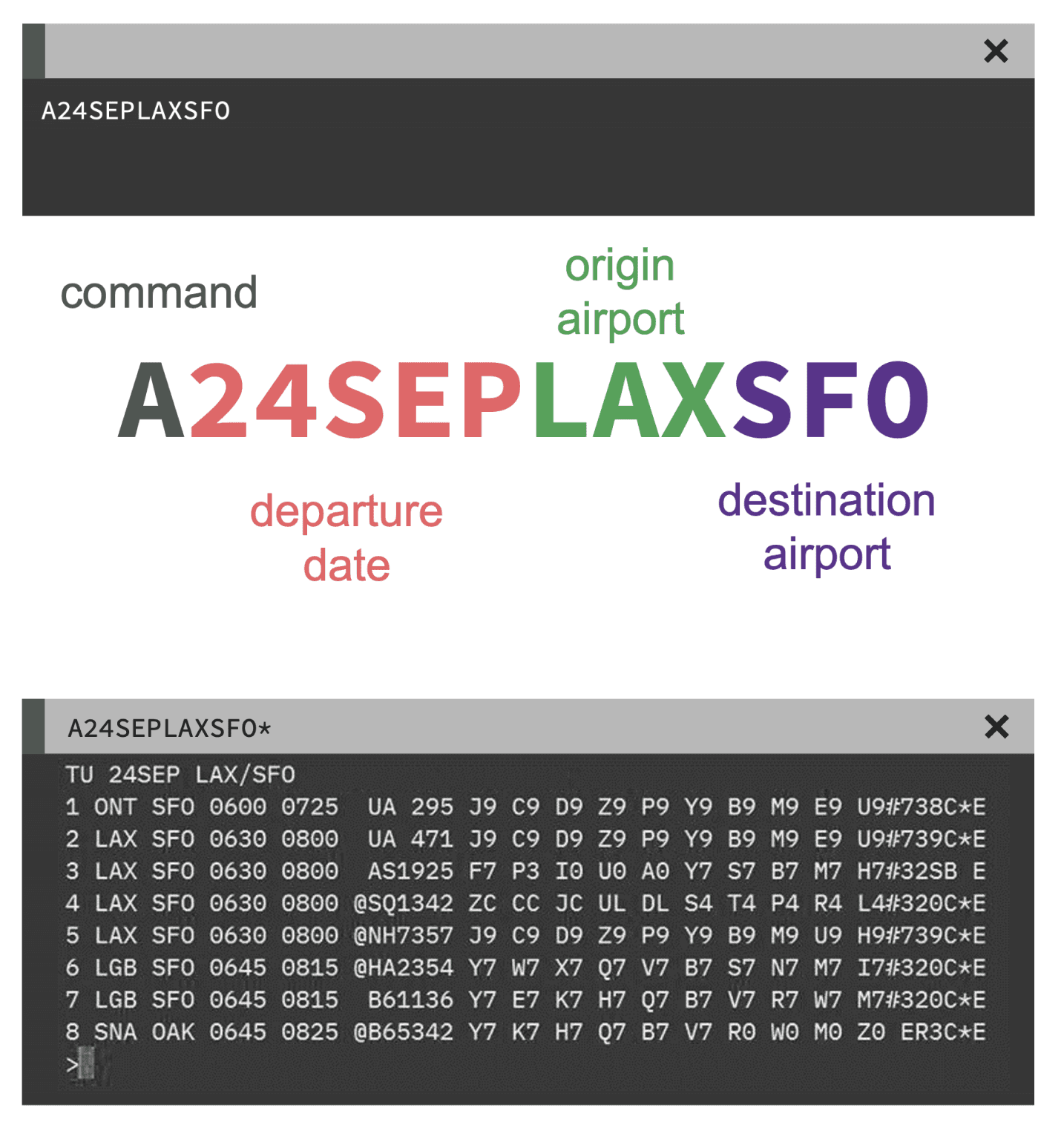
Above: Terminal command and response
With a clearer view of the market and the interface, I moved into the next stage: deep user research. I launched a global program that combined:
Contextual inquiries to observe agents in their real work environments
One-on-one interviews with agency decision makers and trainers to uncover needs, frustrations, and workarounds
Focus groups in Denver, Atlanta, and London to validate patterns across regions.
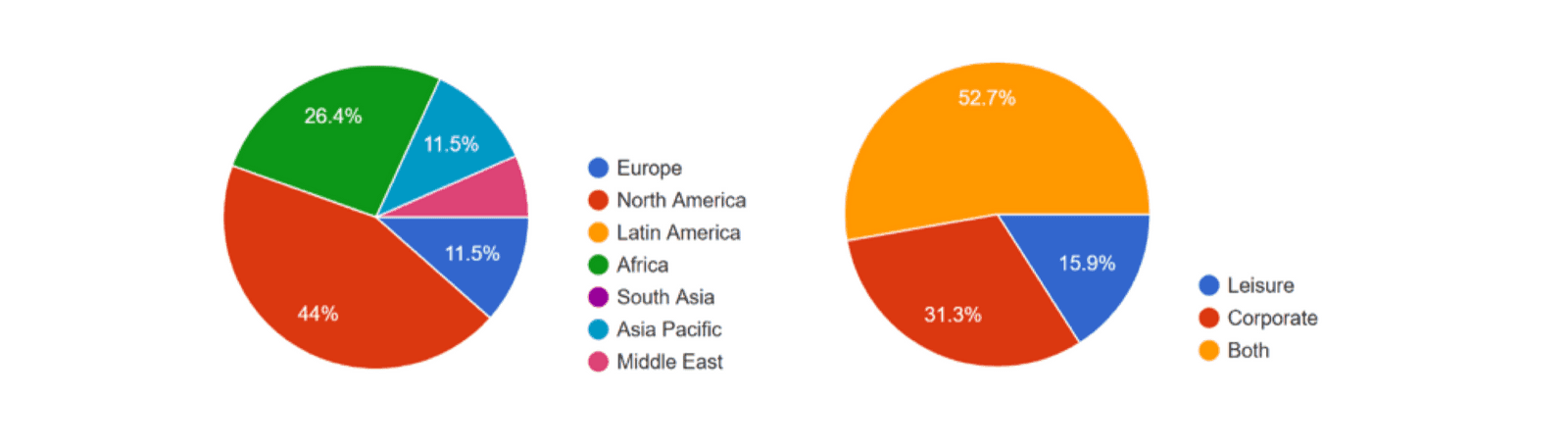
User surveys to capture quantitative insights at scale
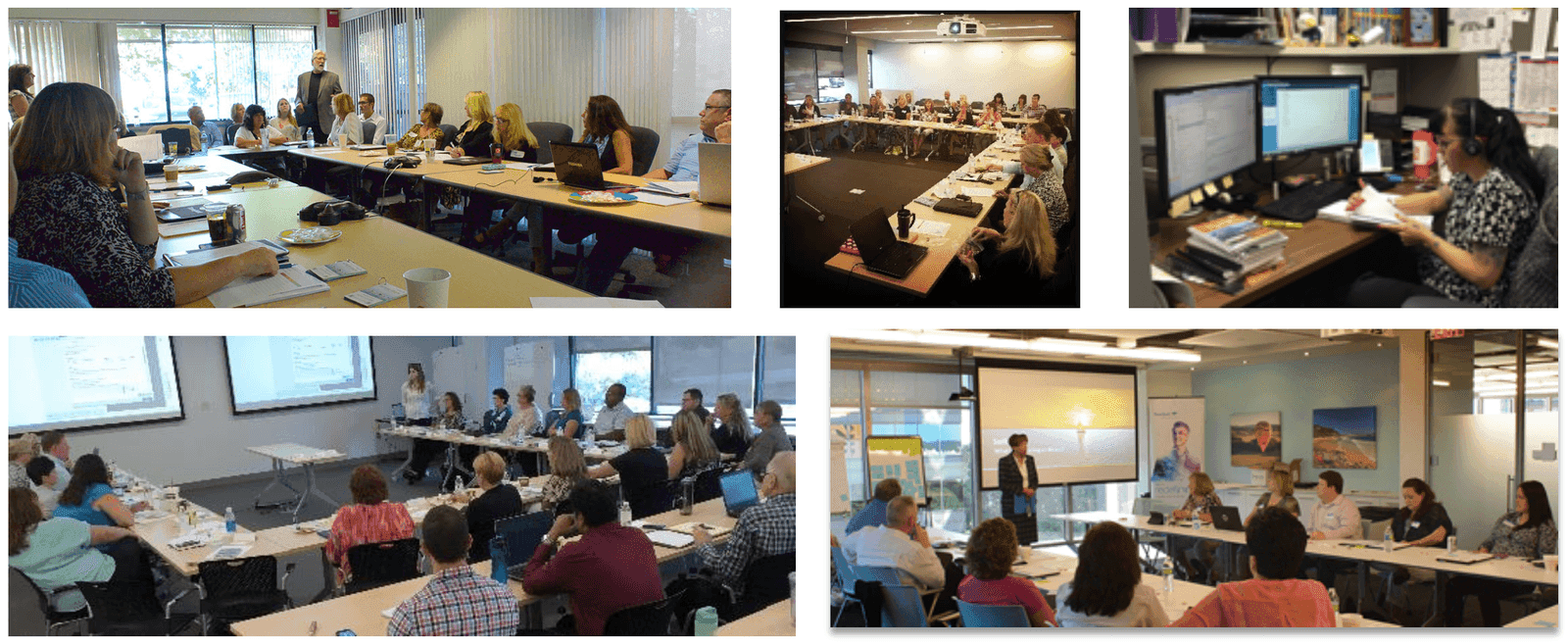
Insights
This approach provided both breadth and depth, revealing how agents actually work and what they truly needed from a modernized tool.
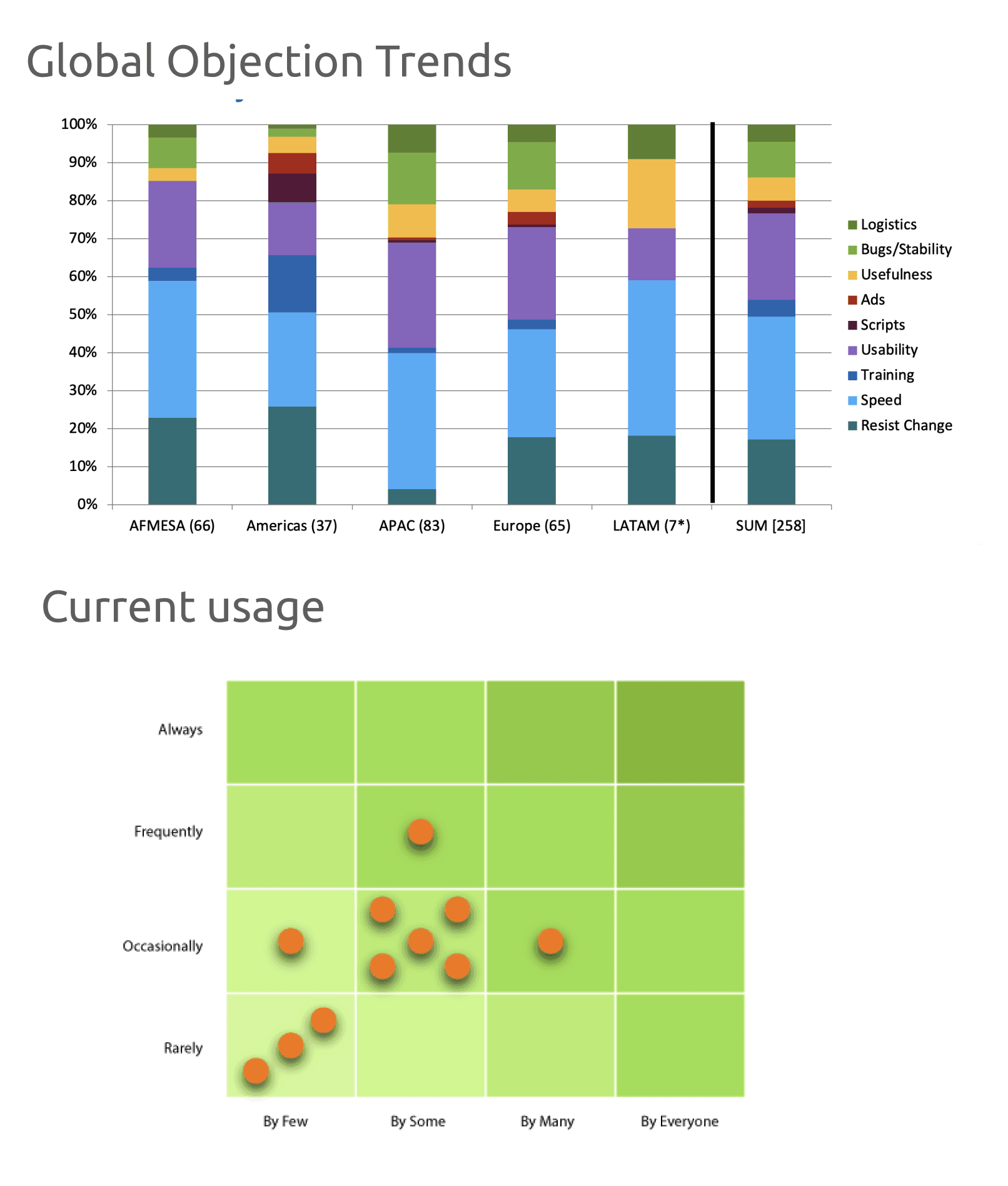
Report charts: Data on reported issues and usage of legacy POS
Personas
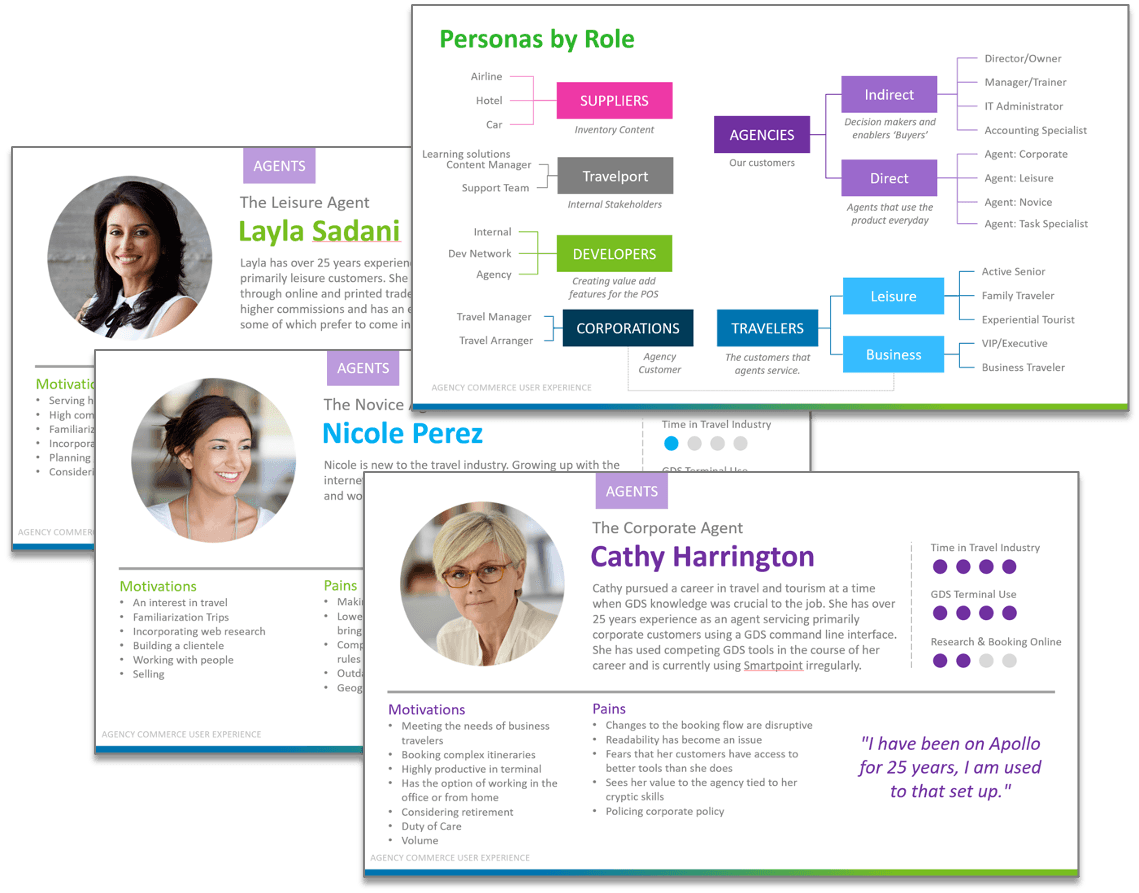
These insights formed the foundation for creating our proto-personas, which captured common behaviors, motivations, and pain points to guide design decisions.
As our journey progressed we expanded and validated our family of personas.
Cathy (The Cryptic Expert) 20+ years in corporate travel, values speed, mastery of commands.
Layla (The Leisure Agent) 20+ years in leisure travel, prefers GUIs, motivated by sales/commissions.
Nicole (The Novice Agent) A new entrant, views the terminal as outdated, expects intuitive tools.
These personas created a shared language across product, engineering, and commercial teams.
Learnings
Cultural Resistance to Change
Travel agents had become highly proficient with cryptic commands and keystrokes, often working faster on a green screen than with GUI. This legacy skill set entrenched the interface long past its natural lifespan.
Through research, we also uncovered a deeper concern: many agents feared that a more user-friendly POS might devalue their expertise - or even threaten their jobs. As a result, earlier attempts to replace the cryptic interface with graphical alternatives were often met with resistance, complaints, and eventual rollbacks.
Our research revealed three primary barriers to adoption:
Behavioral Change Fatigue: Too many workflow changes at once led to measurable drops in performance and rapid abandonment.
Loss Aversion: Users overvalued the efficiency of the legacy system, making them reluctant to switch.
Status Quo Bias: Experienced agents feared losing the professional leverage of their hard-earned expertise.
The outcome was a clear value proposition: deliver a modern POS that preserved expert users’ speed and control while enabling richer content retailing and lowering barriers for new agents.
Problem Statement
As a team we moved into the second half of the first design diamond by framing our problem to be solved:
Focused Problem
Agents needed a modern POS that improved usability without undermining their expertise or slowing them down.
Success Criteria
Preserve the speed and depth of cryptic workflows
Reduce the training burden for new agents
Increase adoption and satisfaction scores across global agencies
Considerations
Address cultural resistance, technical dependencies on legacy systems, and the risk of disrupting airline and agency revenue streams.
Ideation
Our framing made it clear: the solution wasn’t about replacing the green screen - it was about evolving it.
Instead of building a brand-new POS from scratch, I asked the team to imagine a “version 2.0” of the terminal. One that preserved what agents valued while layering in modern efficiency.
I facilitated a series of cross-functional workshops with product, engineering, and design to explore solution directions, align on priorities, and identify technical dependencies. These sessions helped us co-create a shared vision for what Smartpoint could become.
Our design strategy started with Cathy, the expert terminal user. For her, the goal was to modernize the terminal window itself—optimizing for larger monitors and introducing a search form to handle complex cryptic commands. From there, we layered in graphical responses that could display rich content the terminal could never provide, such as maps, seatmaps, and images.
The next step extended this graphical layer into a full-screen experience so that novice users like Nicole could complete the same tasks without ever touching the terminal.
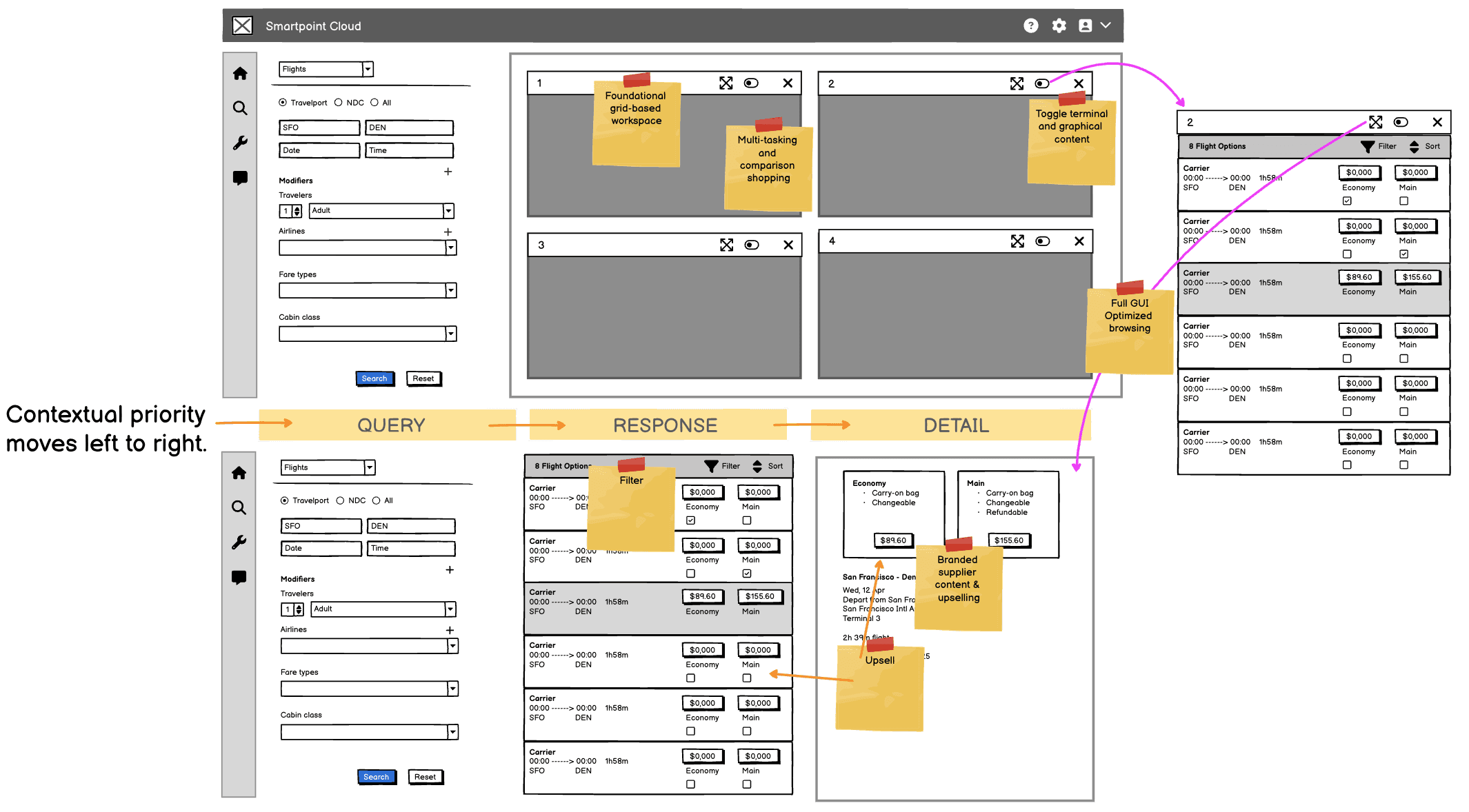
Above: workshop output - wires
The theory was simple: with the green screen as a safety net, expert agents would feel comfortable adopting modernization, since their workflows stayed familiar while gaining new capabilities. At the same time, agencies benefited from easier onboarding, as new agents could avoid the steep learning curve of cryptic commands.
Design Sprints
With our problem framed and value proposition defined, the next step was to explore solution directions in a structured, collaborative way. I facilitated a series of design sprints with stakeholders from product, engineering, and design, ensuring all perspectives were represented early.
Each sprint focused on a specific challenge:
CLI ↔ GUI toggling – exploring how to balance the power of cryptic commands with the accessibility of graphical tools.
GUI-based flight shopping – envisioning how richer content like maps, seatmaps, and fare visuals could improve the booking experience.
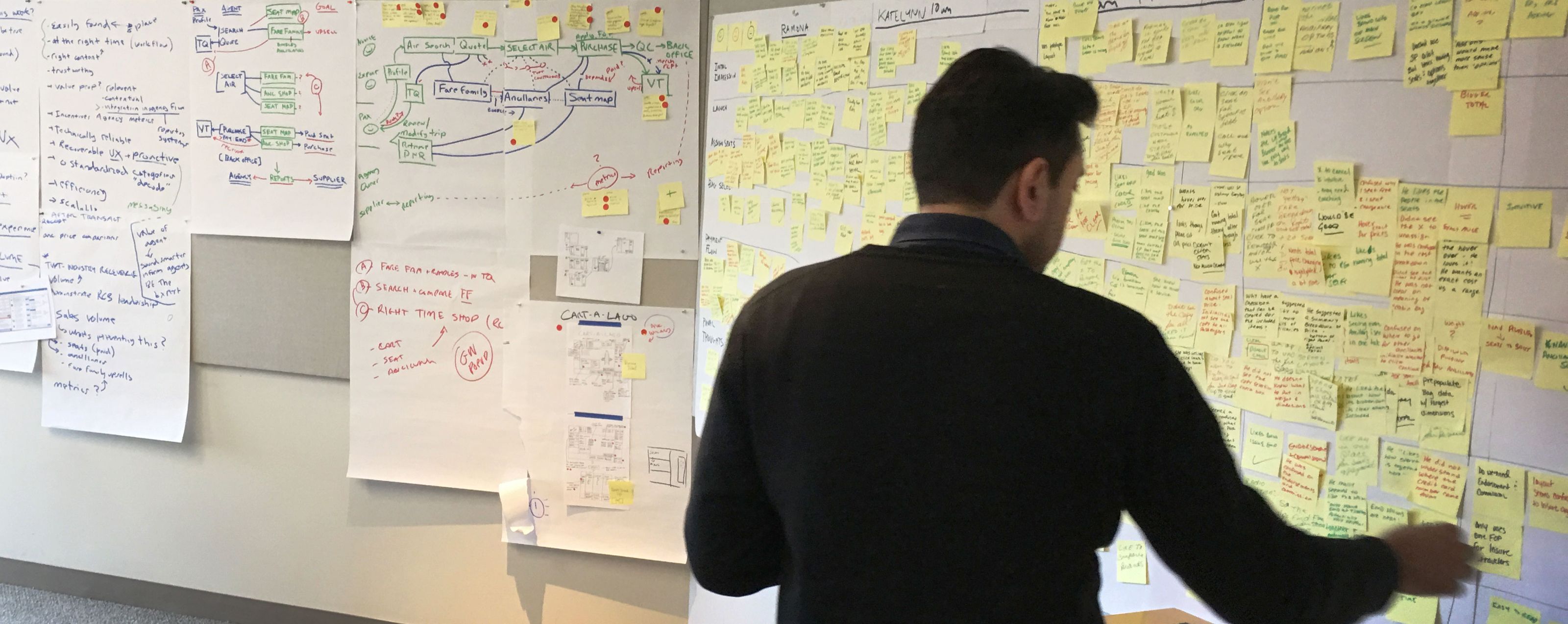
Above: workshop
Within each sprint, we clarified what success would look like, identified gaps and dependencies, and flagged potential blockers. Together, we whiteboarded user flows, translated them into wireframes, and then built out early prototypes that we could put in front of agents for feedback and validation.
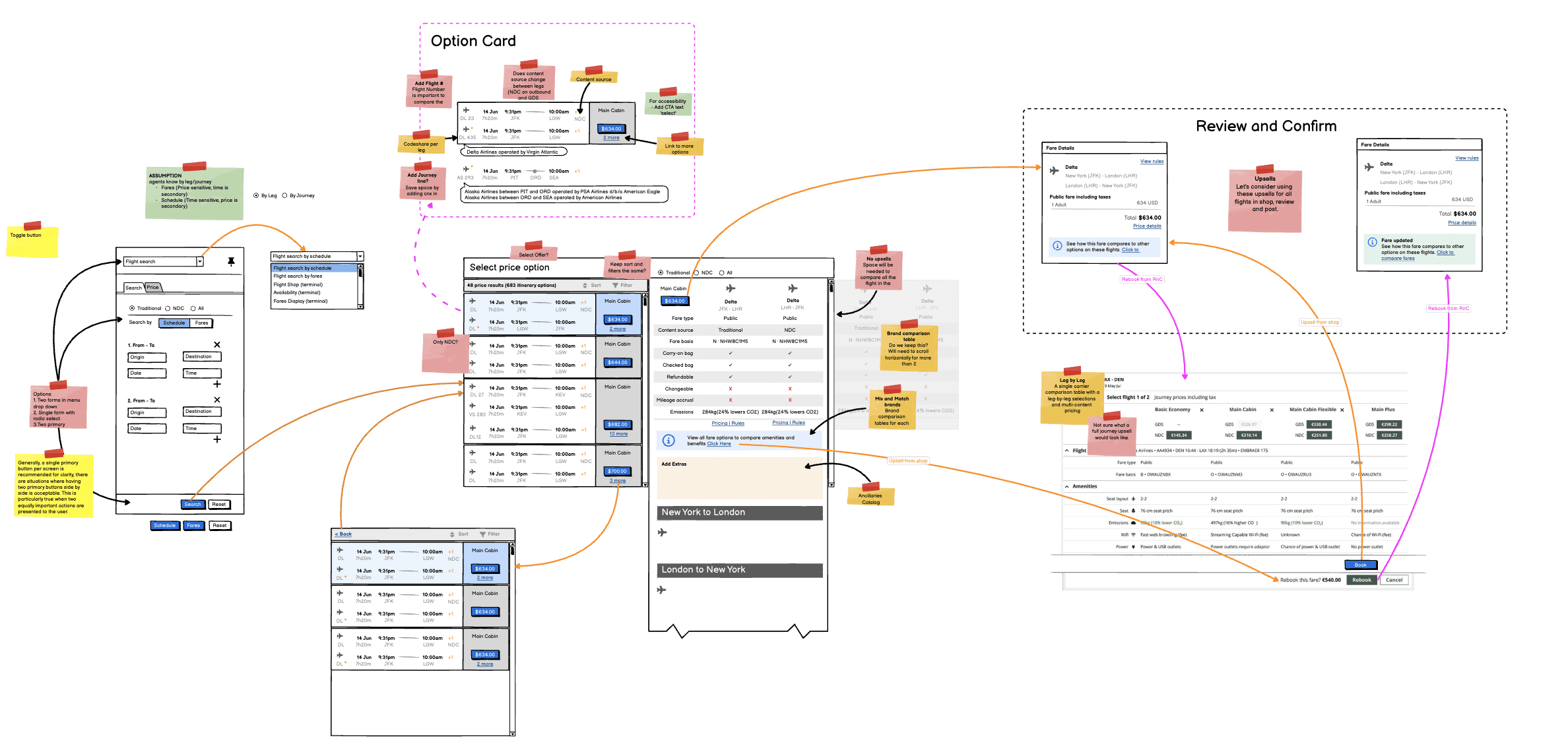
Above: Wires for flight shopping journey
This sprint-based approach allowed us to move quickly from concept to testable artifact, while building cross-functional alignment and momentum behind the modernization effort.
Visiontype
Armed with insights from our exploratory sprints, we built a visiontype: a high-fidelity prototype designed not just to test usability, but to communicate the future-state experience of Smartpoint.
The visiontype served three purposes:
Show the evolution: Demonstrated how the familiar terminal could expand into a hybrid interface: cryptic when speed mattered, graphical when clarity and content were needed.
Align stakeholders: Provided a tangible artifact that product, engineering, and leadership could react to, helping us converge on a shared vision.
Test with users: Allowed us to gather real agent feedback on how the new experience supported their workflows, reduced training barriers, and opened access to richer airline content.
Testing
Expert Agent Test Multi-Window Usability
Participants: Experienced GDS users from agencies in the US, Canada, and UK.
Approach: Iterative rounds of usability testing on a prototype with multiple terminal windows and GUI toggling.
Findings:
Experts responded positively to the familiar multi-window layout and appreciated the option to toggle between cryptic and graphical views
The ability to access branded fares and richer visuals was seen as a major advantage, while retaining terminal speed was non-negotiable.
Overall impressions improved significantly after refinements; participants felt modernization would be well-received if it preserved their workflows.
Key refinements included clearer icons, adjustable window layouts, and tooltips to aid discoverability.
Novice Agent Test (UserTesting.com)
Participants: Six non-agent users (ages 19–35) tasked with booking a complete trip.
Approach: Prototype tested without a terminal window, simulating how a brand-new agent might onboard.
Findings:
Participants completed tasks with ease, consistently describing the interface as “very easy,” “straightforward,” and “organized”
Confidence scores were high (9–10/10), with users noting they would recommend or use the tool themselves.
Minor confusion arose around labeling (e.g., “Add Traveler” vs. “Find Traveler”), but overall task completion remained smooth
Validation
Our two rounds of usability testing provided critical evidence:
Expert agents embraced modernization when it preserved their familiar terminal workflows, valuing the ability to toggle between cryptic and graphical views.
Novice users with no GDS background were able to complete bookings confidently using only the GUI, showing the potential to dramatically lower onboarding barriers.
This validating data was pivotal. It not only confirmed the feasibility of a hybrid approach, but also gave us the credibility needed to align stakeholders. The visiontype became a tangible artifact that product, engineering, and leadership could react to, helping us converge on a shared vision for Smartpoint.
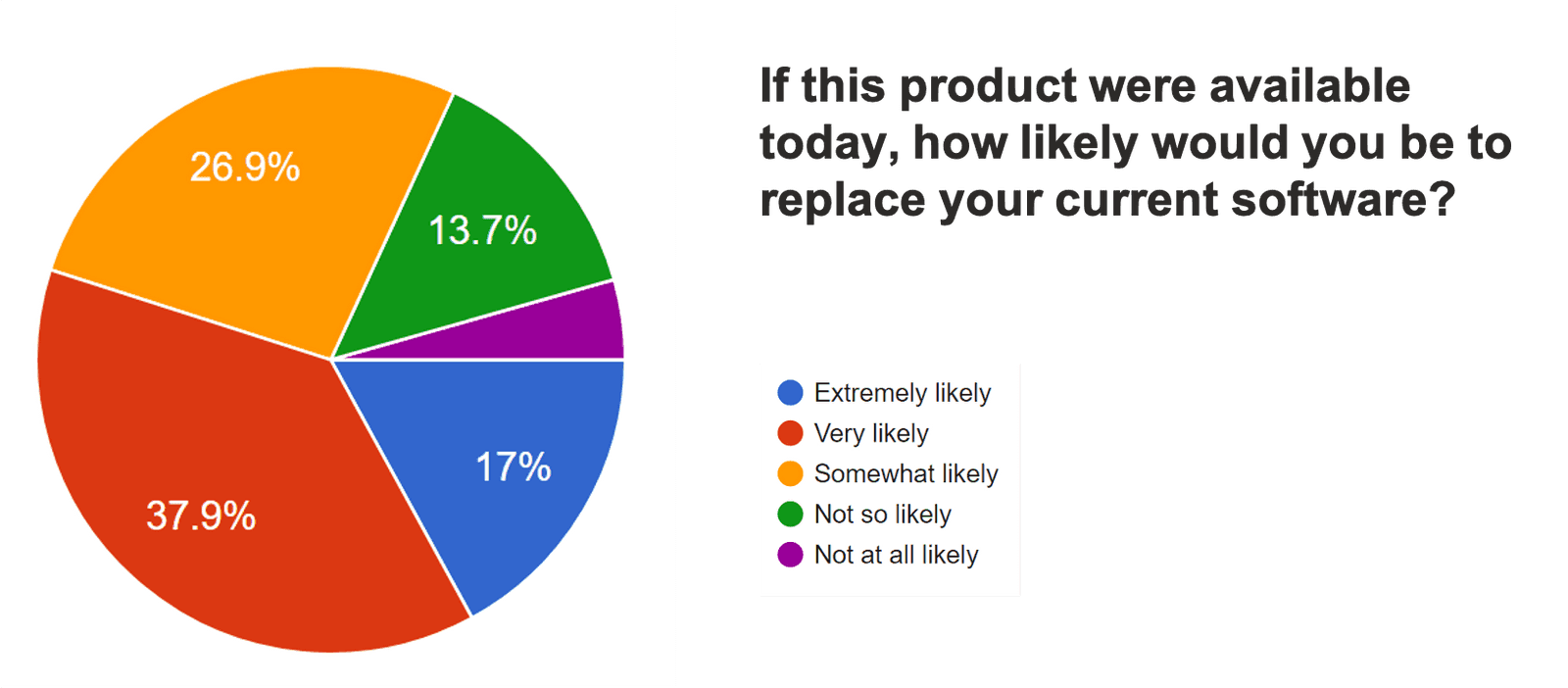
As a follow-up, we expanded testing globally—inviting agency decision makers to review a prototype demo and share their perspectives. The results were clear:
85% responded favorably
7% expressed immediate need.
80% said they would replace their current software with this approach.
This validation confirmed Smartpoint’s hybrid design as both a viable modernization path and a pragmatic adoption strategy for agencies worldwide.
Conclusion
Through global testing, we validated the hybrid vision:
Product Impact: Launched Smartpoint Cloud, a unique hybrid POS that balanced continuity with innovation.
Market Differentiation: Positioned the company as an industry innovator in hybrid CLI/GUI booking.
Cost Savings: Enabled retirement of multiple legacy systems, reducing long-term maintenance.
Adoption: Built trust with expert agents while lowering training barriers for new hires.
Team Impact: Established enduring design and research practices, supported by a scalable design system.
By reframing modernization as an evolution rather than replacement, we overcame resistance, aligned stakeholders, and delivered a differentiated global platform. This case demonstrates how research-driven vision, value proposition alignment, and UX team scaling can transform adoption challenges into lasting business advantage.
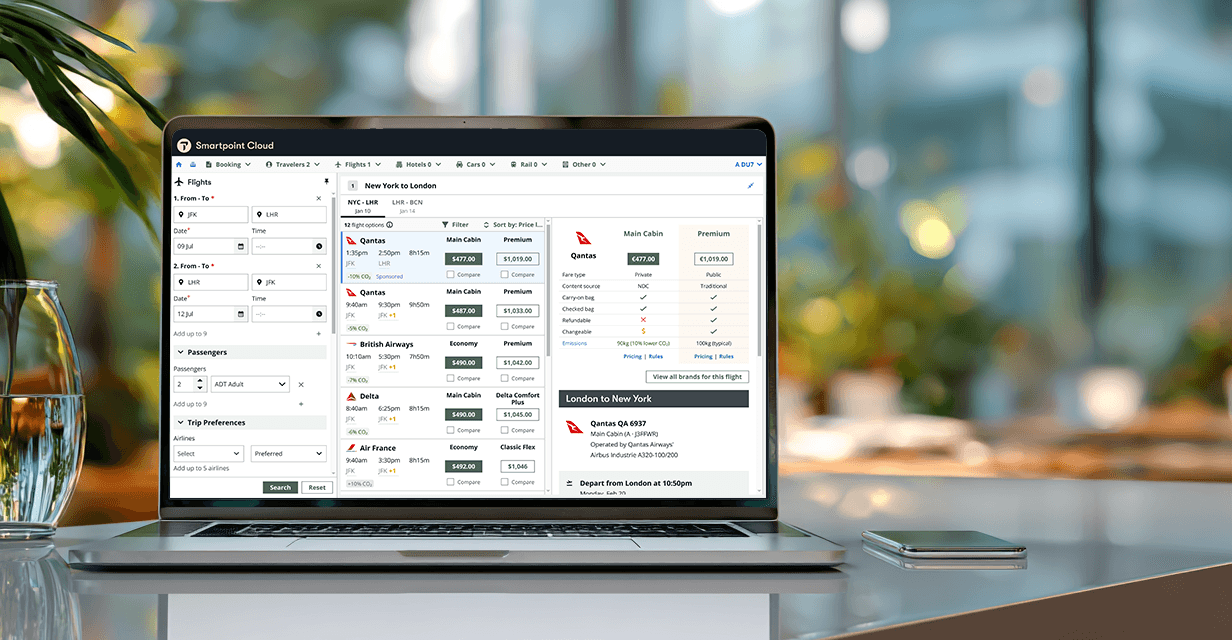
Above: Smartpoint Cloud
A recent CSAT survey for Smartpoint Cloud reflects strong progress toward user satisfaction and competitive standing. With a 61% satisfaction score, the platform performs solidly within enterprise benchmarks for B2B and travel-tech software, where scores typically range from 50–70%.
The majority of agents agree that Smartpoint Cloud is:
easy to use (61%),
well-designed (59%), and
competitive in the industry (58%),
This indicates growing confidence in its usability and design coherence. While roughly one in four respondents remain neutral or dissatisfied (highlighting opportunities to simplify workflows and improve perceived competitiveness) the data confirms that Smartpoint Cloud is earning positive traction and user trust as it continues to evolve into a modern, intuitive point-of-sale experience.
Impact
Travelport’s recent wins with major agencies such as Costco Travel, Chase Travel Group, GlobalStar Travel Management, and Lufthansa City Center International represent a significant validation of the company’s next-generation Smartpoint Cloud platform. Each of these partners operates at scale within its respective market: Costco Travel serving millions of members across North America, Chase Travel overseeing billions in annual transaction value, GlobalStar connecting more than 55 countries through its corporate travel network, and LCCI uniting over 230 independent agencies worldwide. Together, these strategic agreements underscore how Smartpoint Cloud’s modern, API-driven retailing capabilities and unified content access are resonating with both consumer and corporate agencies seeking faster performance, richer content, and simplified workflows.
The modernization of Smartpoint represented more than a UI overhaul; it marked a strategic simplification of Travelport’s entire technology landscape. As part of the transition to Travelport+, the company retired two of its three legacy GDS cores, systems that had been inherited through past acquisitions and had long created duplication, high maintenance costs, and fragmented development efforts. Consolidating these into a single, modern retailing platform not only reduced infrastructure and operational costs but also unlocked greater agility for future innovation: ensuring that both Travelport and its agency customers could evolve faster in a unified, scalable ecosystem.